Decision calculator

Heat pump or gas furnace?

Compare the cash cost of a ducted air-source heat pump with a natural gas furnace. The answer changes with your utility rates, heating load, equipment efficiency, incentives, and whether the furnace option also needs air-conditioning work.
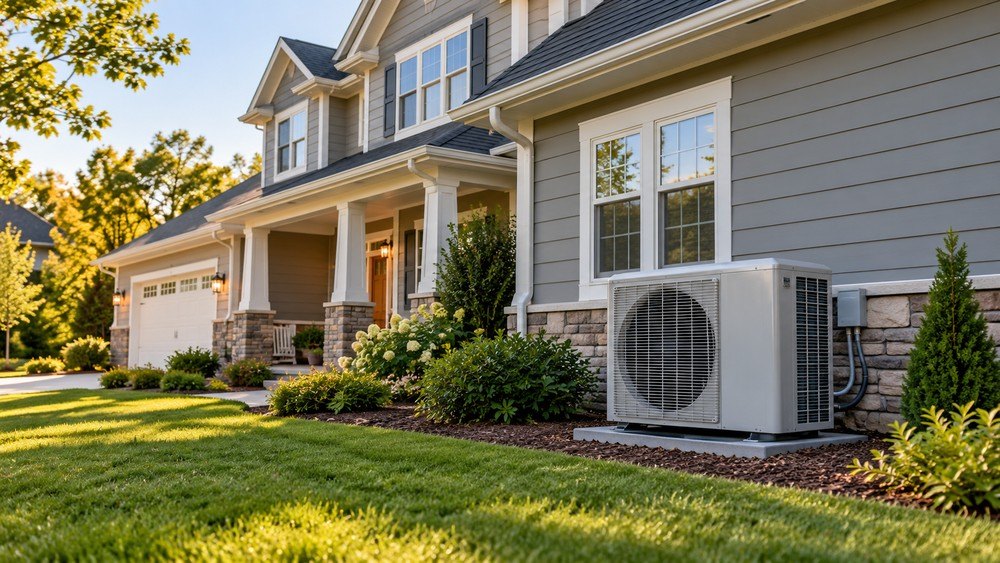
Outdoor heat pump beside a home
This is a cost comparison, not a universal answer.

Comfort, cold-weather capacity, electrical service, ductwork, backup heat, noise, and contractor quality can matter as much as the math.

Try a worked example ("Heat Pump", "Gas Furnace", or "Financially Close" Results)

Illustrative scenarios, not price quotes. Loading an example replaces all inputs and assumptions; you can edit them afterwards.

Heat pump example

Heat pump installed quote: $7,000 · Gas furnace installed quote: $7,000 · Annual gas used for space heating: 700 therms · Electricity price: $0.16/kWh · Natural gas price: $2.50/therm · Compare over: 10 years

Gas furnace example

Heat pump installed quote: $12,000 · Gas furnace installed quote: $7,000 · Annual gas used for space heating: 700 therms · Electricity price: $0.16/kWh · Natural gas price: $1.50/therm · Compare over: 10 years

Financially close example

Heat pump installed quote: $6,500 · Gas furnace installed quote: $7,000 · Annual gas used for space heating: 700 therms · Electricity price: $0.16/kWh · Natural gas price: $1.50/therm · Compare over: 10 years

Step 1

Quick comparison

Use the quotes and utility numbers you can verify. The defaults are examples, not national averages.

Start here

Values shown are editable example defaults. Change them to match your situation.

$0.16/kWh
Find your heating use and utility rates

Heating use: check 12 months of gas bills or your utility usage history. If the meter also serves hot water or cooking, ask your utility or contractor for a heating-only estimate. Do not use one winter month as the annual total.

Rates: use dollars per kWh and per therm. Include supply and delivery charges that change with use; leave out flat monthly fees. For example, 16 cents per kWh is $0.16/kWh.

If you cannot separate heating use, explore the example values first. The result remains an illustration until you have a reasonable estimate for your home.

Jump to current result ↓

Results

Example comparison - replace the starting values with your own.

Compares modeled costs over the same period. Monthly equivalents are not loan payments.

Starting assumptions are included.

Review cost assumptions
Live result Updates automatically as you change the numbers

—

—

Heat pump total — —
Gas furnace total — —
Estimated difference —

Your break-even point

Estimated crossover — When one option's lower annual cost offsets a higher upfront cost.
What could change the result?
What changes the answer? Utility prices matter.

—

How stable is this result?

—

Three illustrative cases, not probability estimates. The base case uses your entered values. Compared with that base, the conservative heat-pump case uses COP 15% lower (minimum 0.5), electricity price 15% higher, and gas price 10% lower. The stronger heat-pump case uses COP 15% higher, electricity price 10% lower, and gas price 15% higher. Installed quotes, required AC work, incentives, maintenance, heating use, furnace efficiency, and comparison years stay fixed. Test your own uncertain costs too.

See the math

—

Step 2

Cost assumptions - check required AC work

Include required AC work before comparing equivalent heating/cooling scope. Refine efficiency, incentives, and annual maintenance as needed.

Current furnace: — Heat pump COP: — New furnace: —
Review assumptions

The model first estimates your home's annual delivered heating load from current furnace use, then calculates how much gas or electricity each replacement system would need.

Efficiency

2.8

Upfront + maintenance

Why these defaults? Source notes and assumptions · How defaults work

Read the full guide →
What this comparison includes and leaves out

Other factors in your decision

This model compares the financial paths you enter. Safety, code requirements, warranty coverage, reliability, downtime, financing constraints, and unusual installation conditions can outweigh a small modeled cost difference.

Visible assumptions

Quotes, rates, efficiency, incentives, and maintenance stay on the page.

Checkable math

One therm equals 100,000 Btu; one kWh equals 3,412 Btu. The model converts both options to the same delivered heating load.

No fake precision

Real heat-pump performance varies with outdoor temperature, sizing, controls, ductwork, and backup heat.

How to interpret the estimate

These estimates are undiscounted: they do not model inflation, the time value of money, or every future failure. Monthly equivalents divide modeled cost across the period; they are not loan payments. Read the scope and exclusions for each model.

Resolve safety concerns with a qualified professional before comparing cost. Confirm quote scope, eligibility for incentives, and expected service life.